Transfix
Cross-Team Issue Management
Transfix is a digital freight marketplace. The internal tools team built the operational infrastructure used by the humans coordinating thousands of active shipments, making complex, time-sensitive work feel manageable at scale.
Background
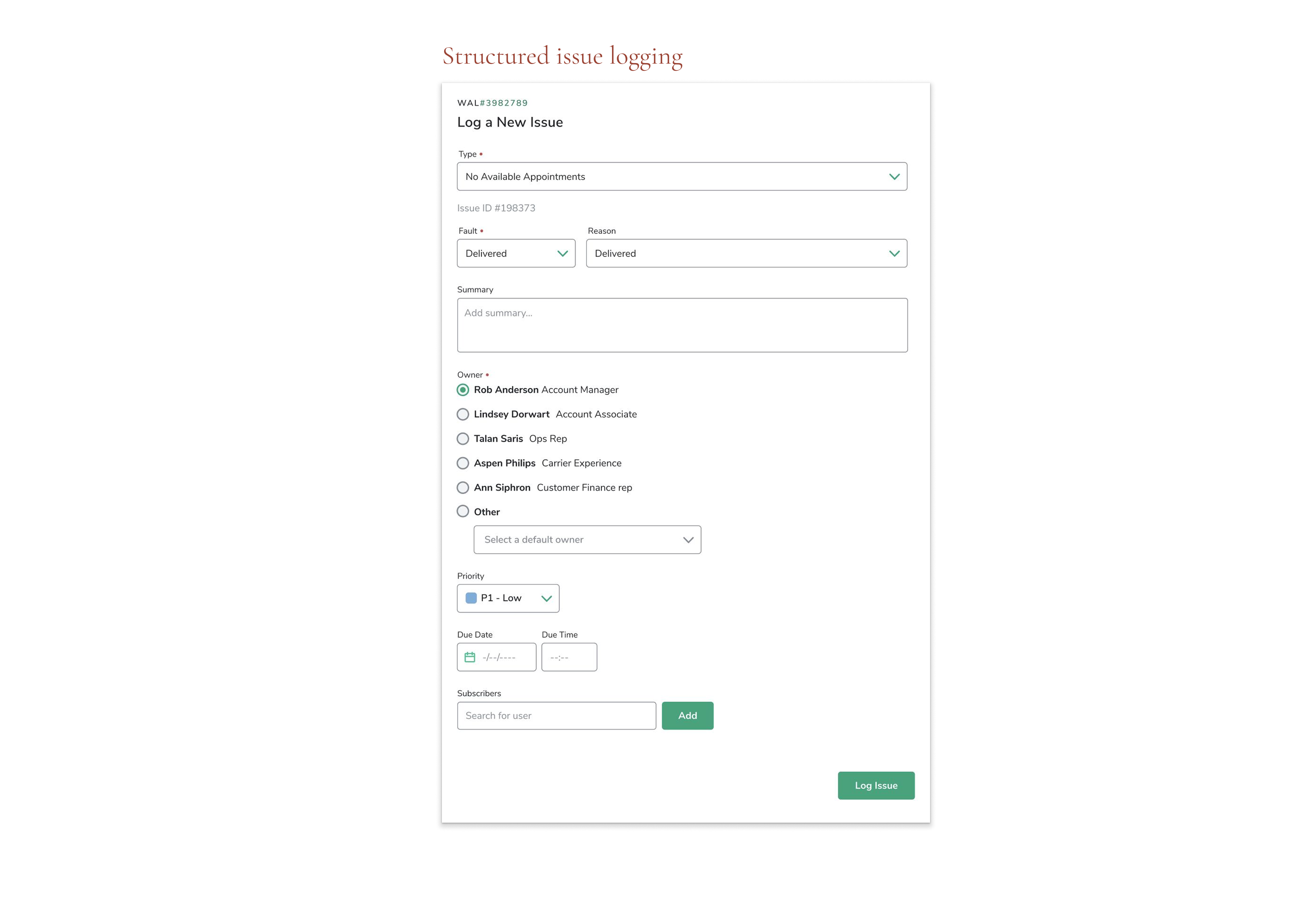
Workflow research surfaced shipment issues, the exceptions and escalations that interrupt a normal shipment flow, as one of the most prevalent and highest-impact sources of inefficiency in daily operations. There was no alignment on what counted as an issue, no standard process for handling one, and no central place for issues to be documented or stored. The work touched nine teams across the company.
Discovery
Ran individual and group stakeholder interviews across the affected teams to define which issues occurred most frequently, what information needed to be collected, who was responsible, who should be notified, and when an issue was considered resolved.
Phased Rollout
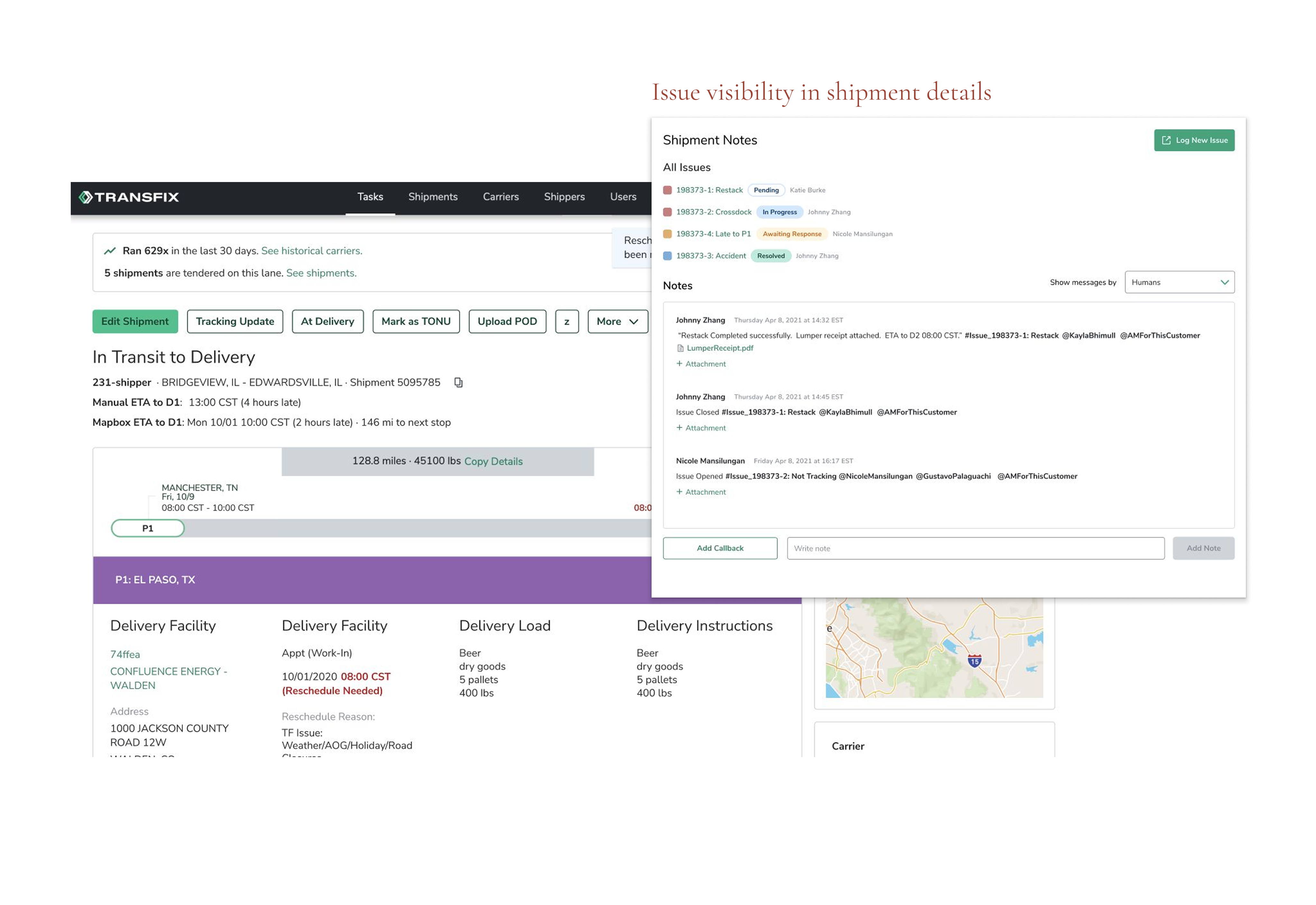
Engineering constraints meant the full issue logging experience couldn't be built in the old codebase, but it needed to live on the Shipment Details Page that existed there. The work was structured in four phases.
-
Creating & Viewing Issues
A standard issue template plus a base set of issue types tied to the existing Shipment Details page.
-
Issue Control Panel
Leads could create new issue types and define automatic assignment and subscription logic, default priority, and steps to resolve, directly, without engineering support.
-
New Shipment Details Page
Built around the new issue model in the new codebase.
-
Retire the Old Page
Migrated remaining functionality and decommissioned the legacy Shipment Details page entirely.
Iteration on the Issue Selector
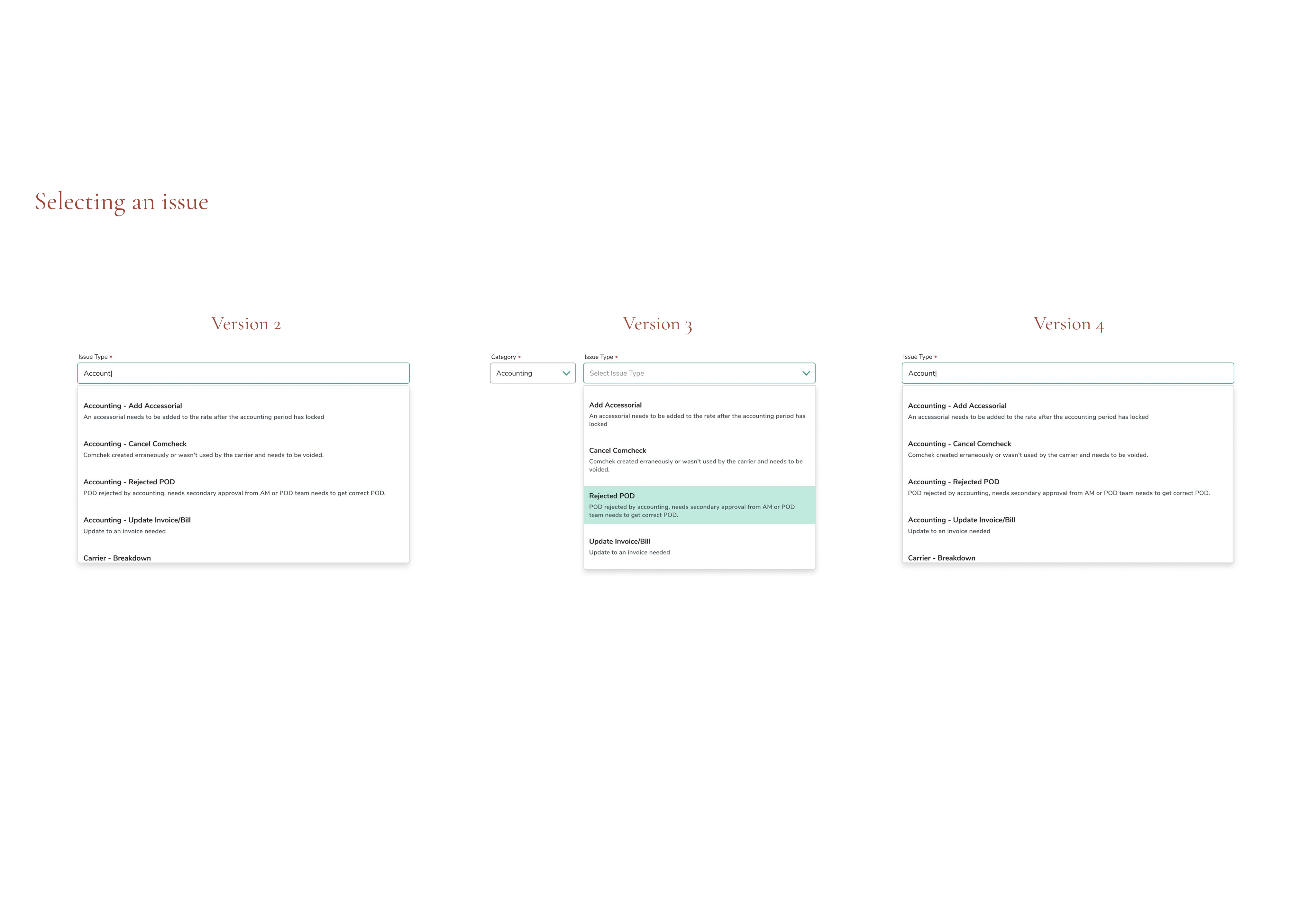
The first version of issue selection was a single dropdown of issue types. Observing reps in practice, scanning a flat list was slow and the right issue was often ambiguous. Across V2 to V4 the selector evolved from a flat dropdown, to a dropdown with definitions, to a category + type structure, to an autocomplete that surfaced category, issue type, and definition in a single searchable field.
Outcome
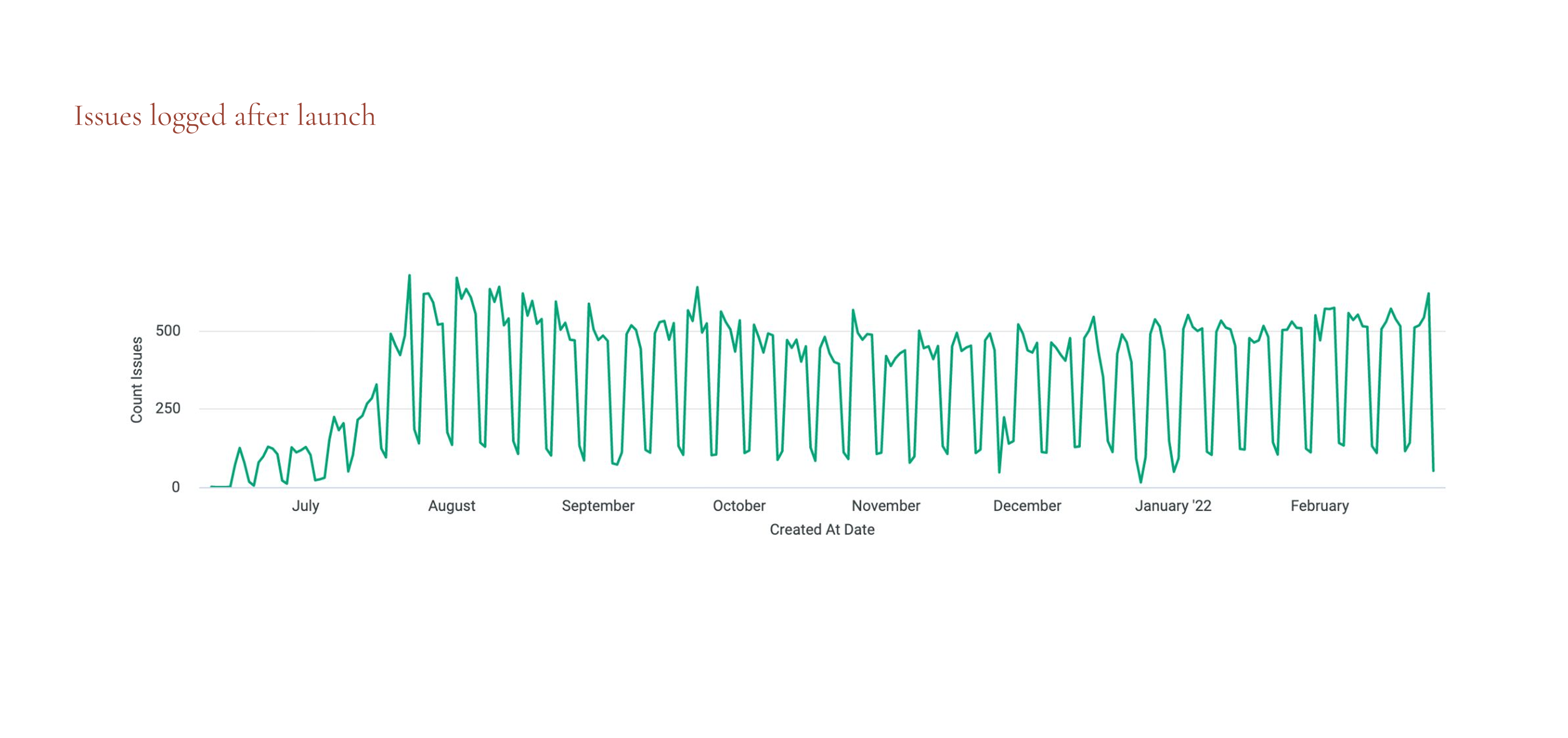
Sustained adoption across ops teams, with issue volume stabilizing at roughly 500 issues logged per day within weeks of rollout.
Issues became a shared, structured record rather than a scattered set of Slack threads and spreadsheets. Leads got a path to manage issue taxonomies directly, and leadership got visibility into where operational breakdowns were concentrated. Once the system was rolling, the same structure was extended to handle Rescheduling, previously the highest pain point in Account Management Operations, folding reschedule requests into the same owner-tagged, priority-coded workflow rather than letting them live in Slack threads and email.

