Maven Clinic · MPractice
Clinical Documentation
MPractice is Maven Clinic's provider-facing platform: the workspace where clinicians, Care Advocates, and coaches run appointments, document encounters, and manage their schedule.
Background
MPractice's documentation system had grown without a coherent design. Inconsistent note types, no standardized templates, and no way to amend a signed encounter note without workarounds. For Care Advocates handling high volumes of async work, the gaps were especially costly: they were spending disproportionate time working around a system that didn't match their clinical workflows. Providers were documenting outside of MPractice, in Google Docs, on paper, because they didn't trust it to save or submit reliably.
Foundational Research Synthesis
Co-led a documentation research effort that combined provider and Care Advocate surveys, stakeholder interviews, provider shadowing, and a retrospective of clinical documentation bugs. The synthesis produced a prioritized framework of nine problem areas, ranging from "documentation 'sticks' when navigating between appointments" (a patient safety and PHI concern) to "rich data collected via encounter summary is isolated and unusable as a result." The framework grounded the next 18 months of documentation work and structured how engineering, design, and clinical leadership made tradeoffs against it.
The work that followed organized around four documentation moments — points in the workflow where documentation had to happen — each with its own gap and product solution.
-
During the appointment
Documenting in real-time while the member is on the call.
Gap
Encounter summaries were monolithic forms, hard to focus on the active section while running back-to-back appointments.
Solution
Collapsible-card encounter summary so providers can focus on the section they're working on without scrolling through a single long form.
-
Post-appointment messaging to the member
Closing the loop with a follow-up note after the session.
Gap
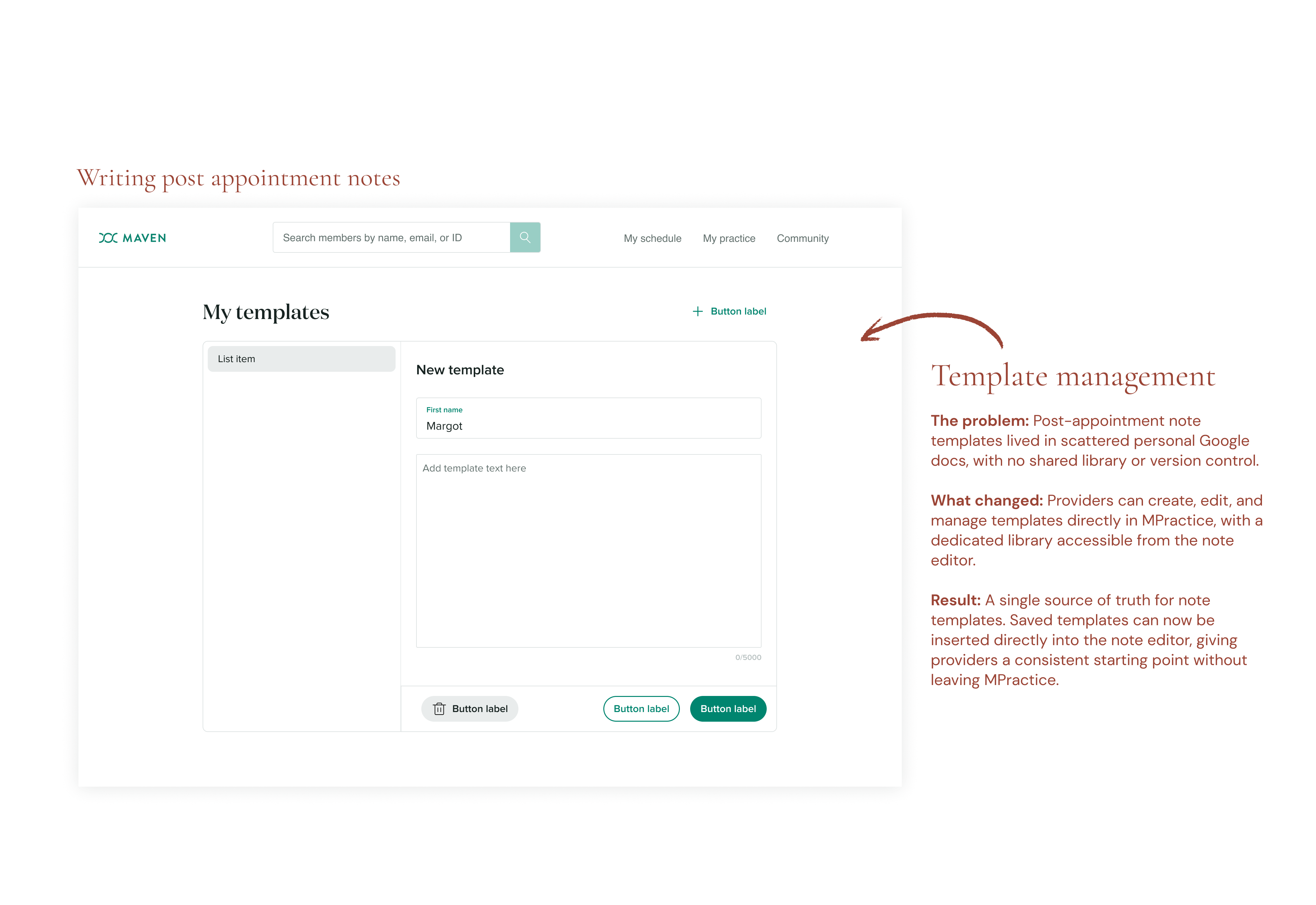
Personal templates lived in external Google Docs and were copy-pasted into MPractice — the single most common source of messages sent to the wrong member. Internal notes had to be written manually, eating into post-appointment time.
Solution
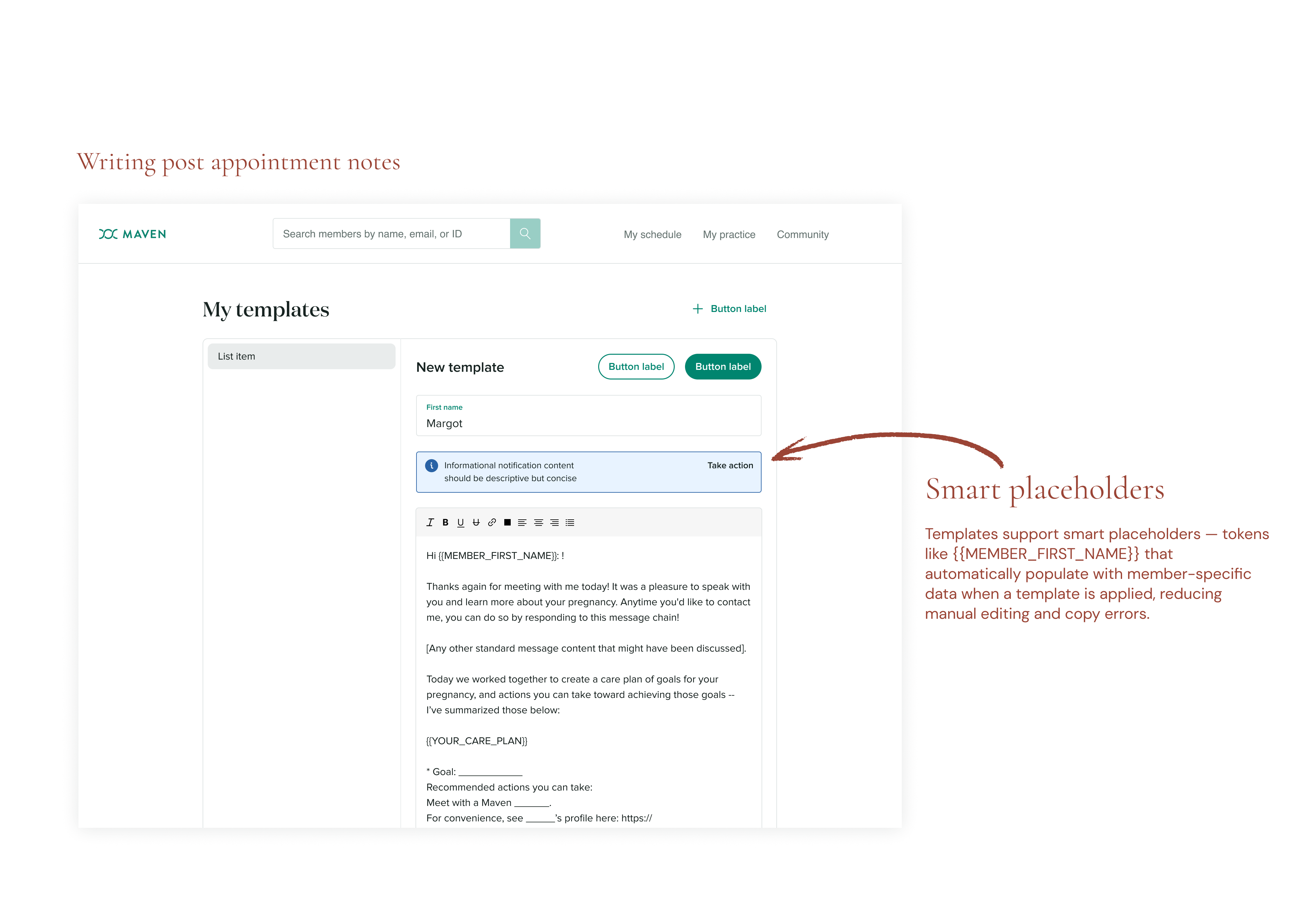
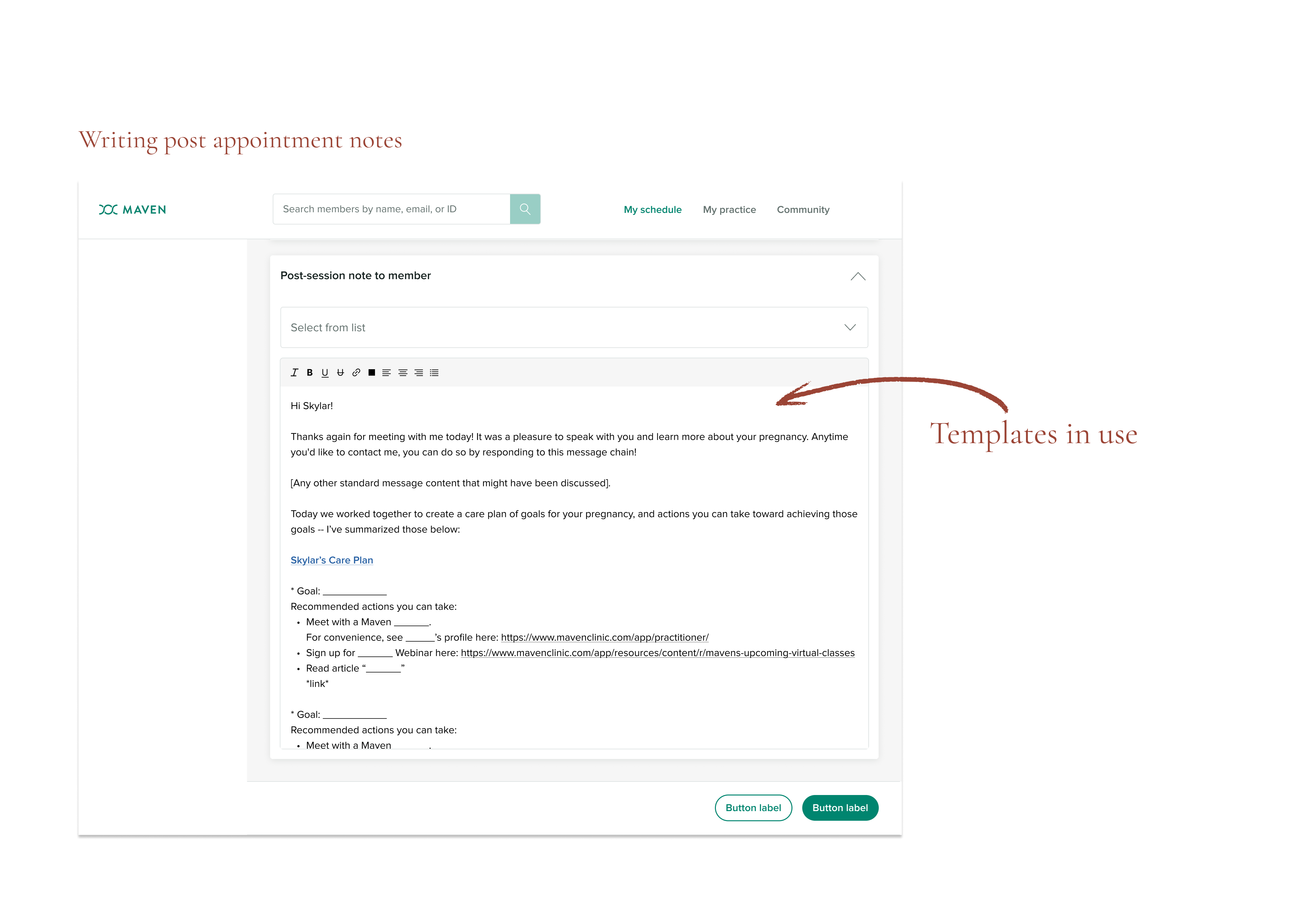
In-product template library with smart placeholders that auto-populate member-specific fields, plus an architecture that supports clinic-level shared templates owned by leadership. AI-drafted internal notes populated inline from the appointment transcript, building on the same documentation surface that templates established.
-
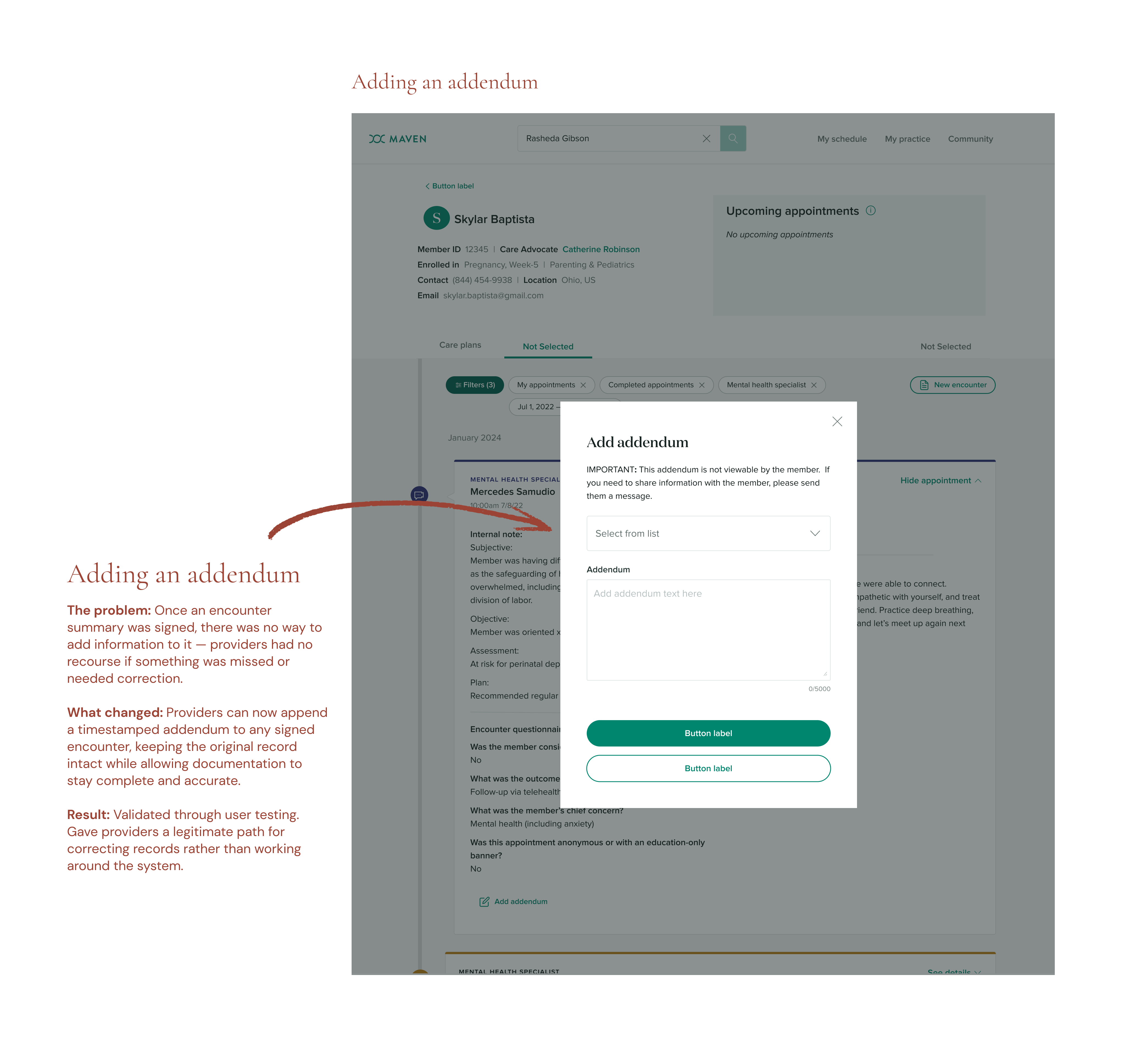
Amendments to a signed encounter note
Correcting or augmenting documentation after it's been signed.
Gap
Adding information after signing required manual care team intervention. Providers had no path to handle it themselves, creating friction in clinical record updates.
Solution
Structured addenda flow lets providers append a timestamped, reasoned amendment to any signed note. The addendum is internal-only and clearly labeled in the encounter summary.
-
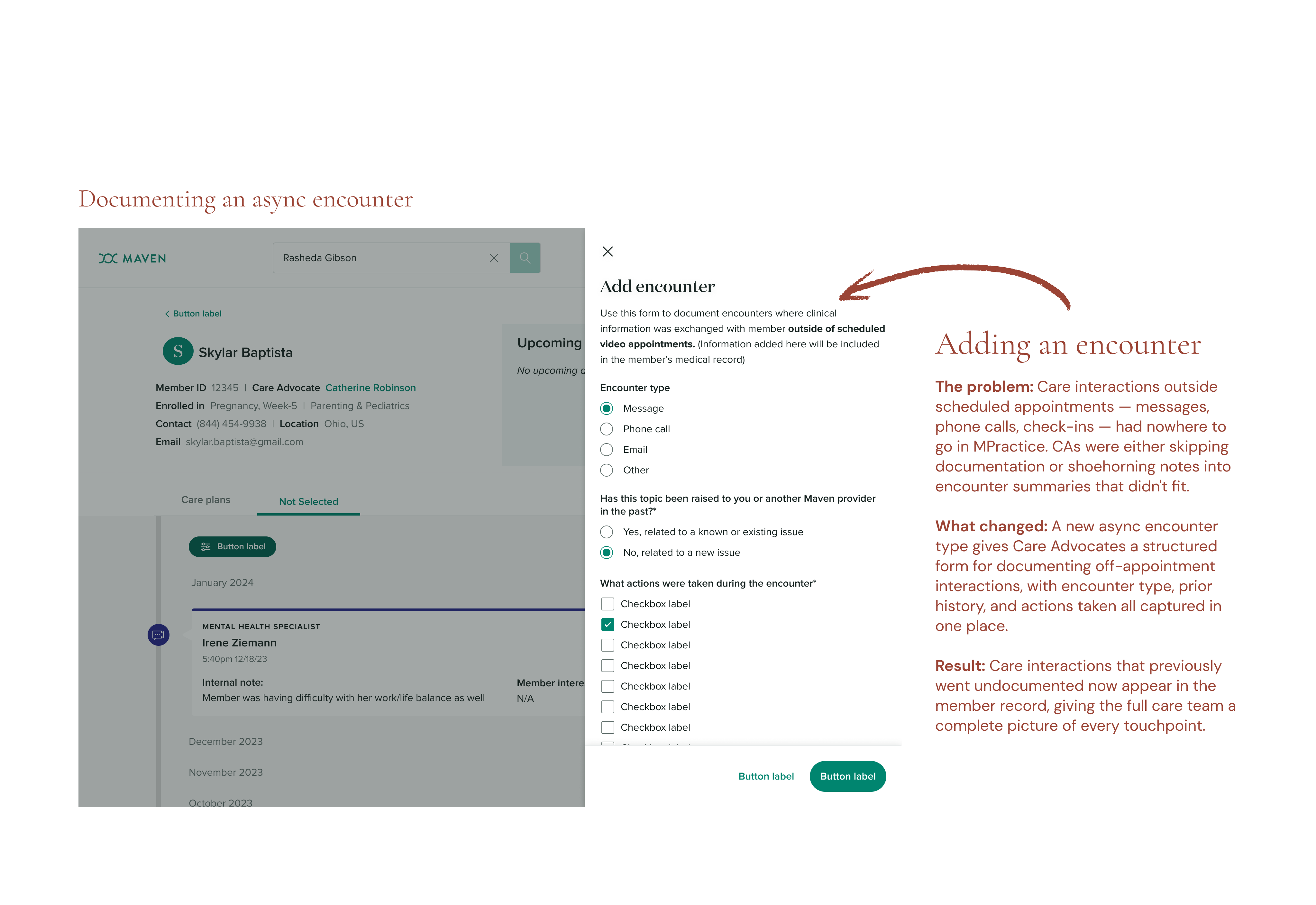
Care outside scheduled appointments
Messages, phone calls, and other off-appointment touchpoints.
Gap
These interactions had no structured place to live in MPractice. Care Advocates were either skipping documentation or shoehorning notes into encounter summaries that didn't fit.
Solution
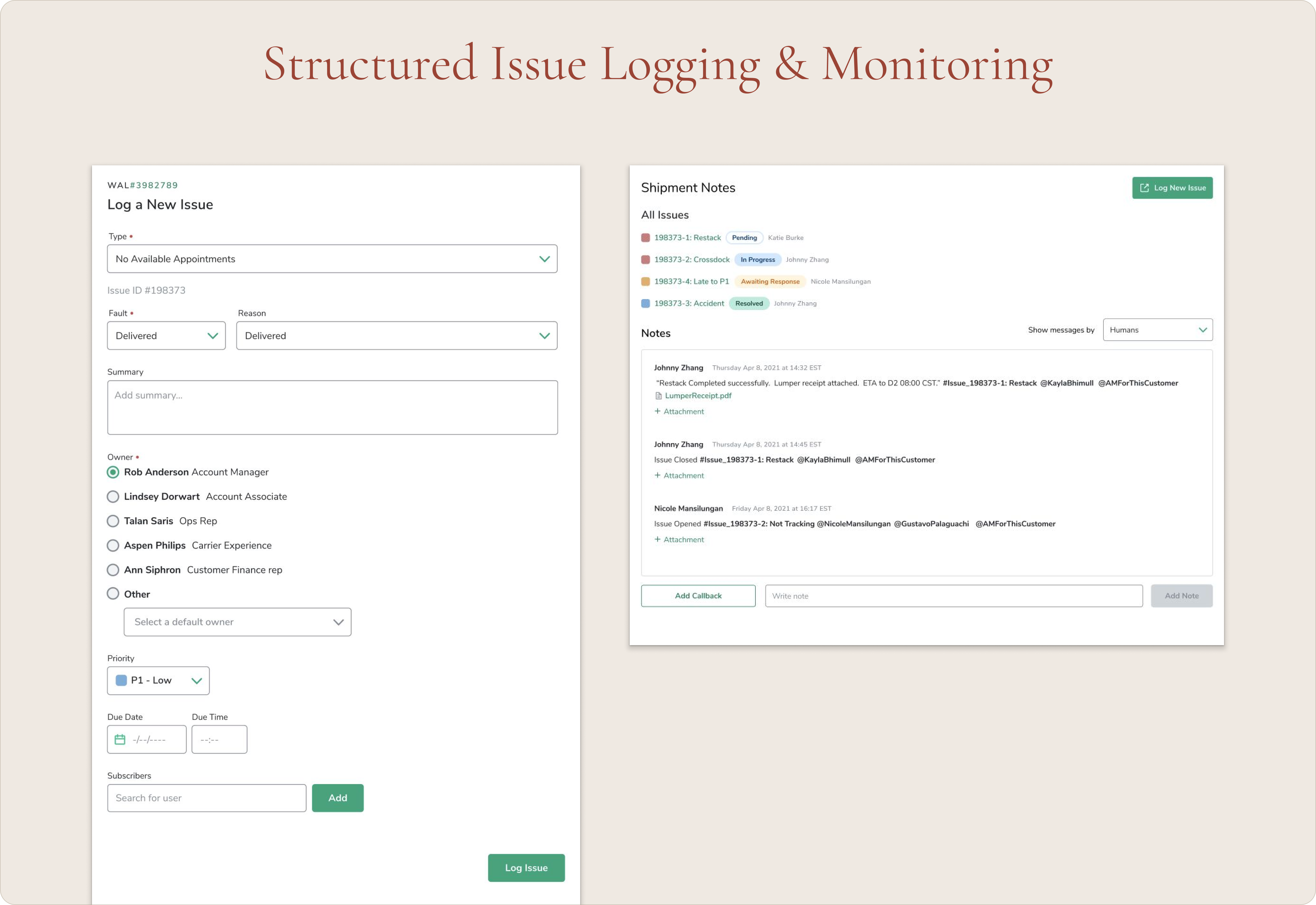
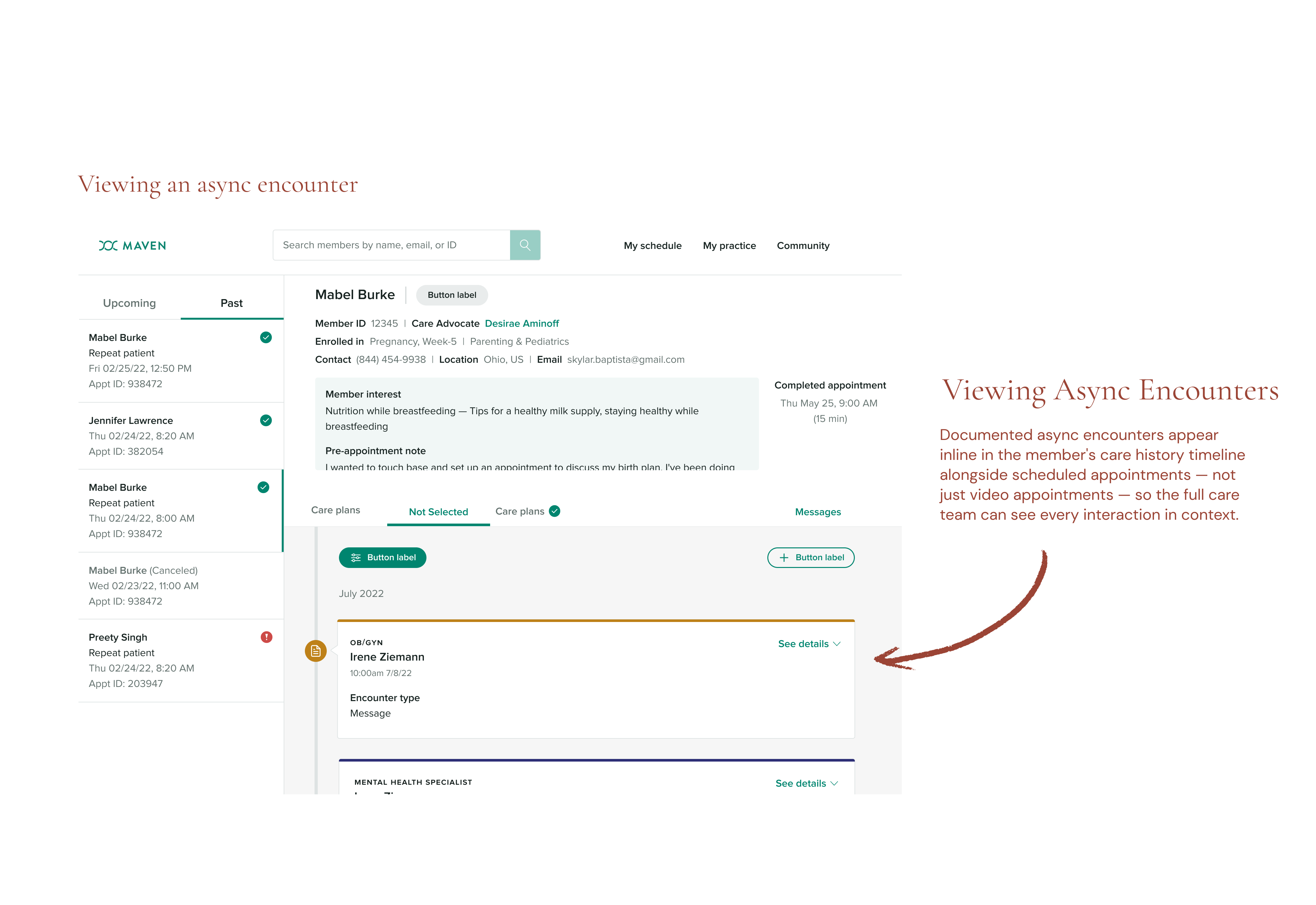
New async encounter note type with a structured form, surfaced inline in the member's care history alongside scheduled appointments.
Templates
Designed an in-product template system so practitioners could store, edit, and apply post-appointment message templates without leaving MPractice — replacing the personal Google Docs that had become the most common source of misdirected messages.
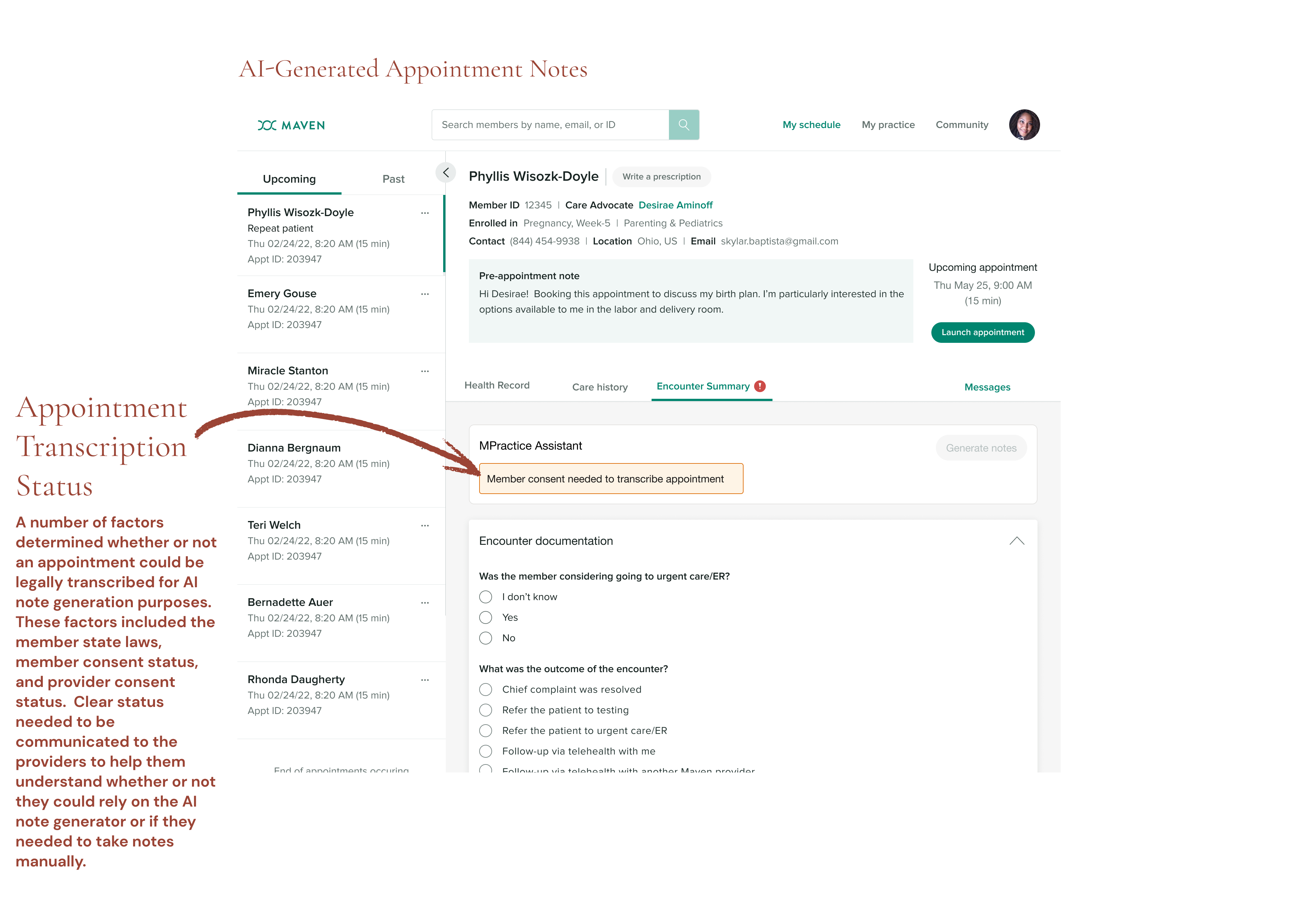
AI-Drafted Documentation (the next iteration)
Templates solved the "I need to write the same thing many times" problem. The natural next step was to remove the writing entirely. AI-drafted documentation, layered onto the same encounter summary surface that templates had established, generated first-draft notes from appointment transcripts that providers and Care Advocates could review, edit, accept, or discard. I contributed on how this fit into the documentation surface and the encounter summary structures that shaped what AI was generating against.
Addenda
Designed an addenda flow that let providers append timestamped amendments to a signed encounter note, closing a critical gap that had previously required manual care team intervention. Validated the design through user testing with seven participants — three providers, three Care Advocates, and a compliance reviewer.
Async Notes
Designed a new note type for capturing care interactions that happen outside scheduled appointments — messages, phone calls, check-ins — which previously had nowhere structured to live in MPractice. Reconciling this new pattern with a care history panel built entirely around appointment-tied notes was the central challenge.
Outcome
AI-assisted documentation reduced post-appointment documentation time meaningfully. Beta users reported saving 2 to 5 minutes per appointment, against a target reduction of 4 minutes from a baseline of 6 to 7 minutes. The feature was projected to deliver an estimated $300K in FY26 savings for Care Advocate and coaching workflows.
Beyond the AI metric, the broader documentation rebuild closed gaps that had cost the team for years. The addenda flow eliminated a manual care-team intervention path. The template system removed an external Google Doc dependency that had been the single most common source of misdirected messages. The research synthesis became the canonical artifact teams across MPractice referenced for two years of documentation roadmap planning.