Maven Clinic · MPractice
North Star Strategy
MPractice is Maven Clinic's provider-facing platform: the workspace where clinicians, Care Advocates, and coaches run appointments, document encounters, and manage their schedule.
Background
After several years of feature-by-feature growth, MPractice had accumulated significant product debt: a fragmented iOS app, a web product lacking feature parity, and tooling that had grown organically without shared direction. Work was happening across multiple pods, and individual decisions were collectively pulling the platform further from coherence. Clinical leadership and product needed alignment before committing to a multi-year platform investment, and designers needed a north star to evaluate tradeoffs against.
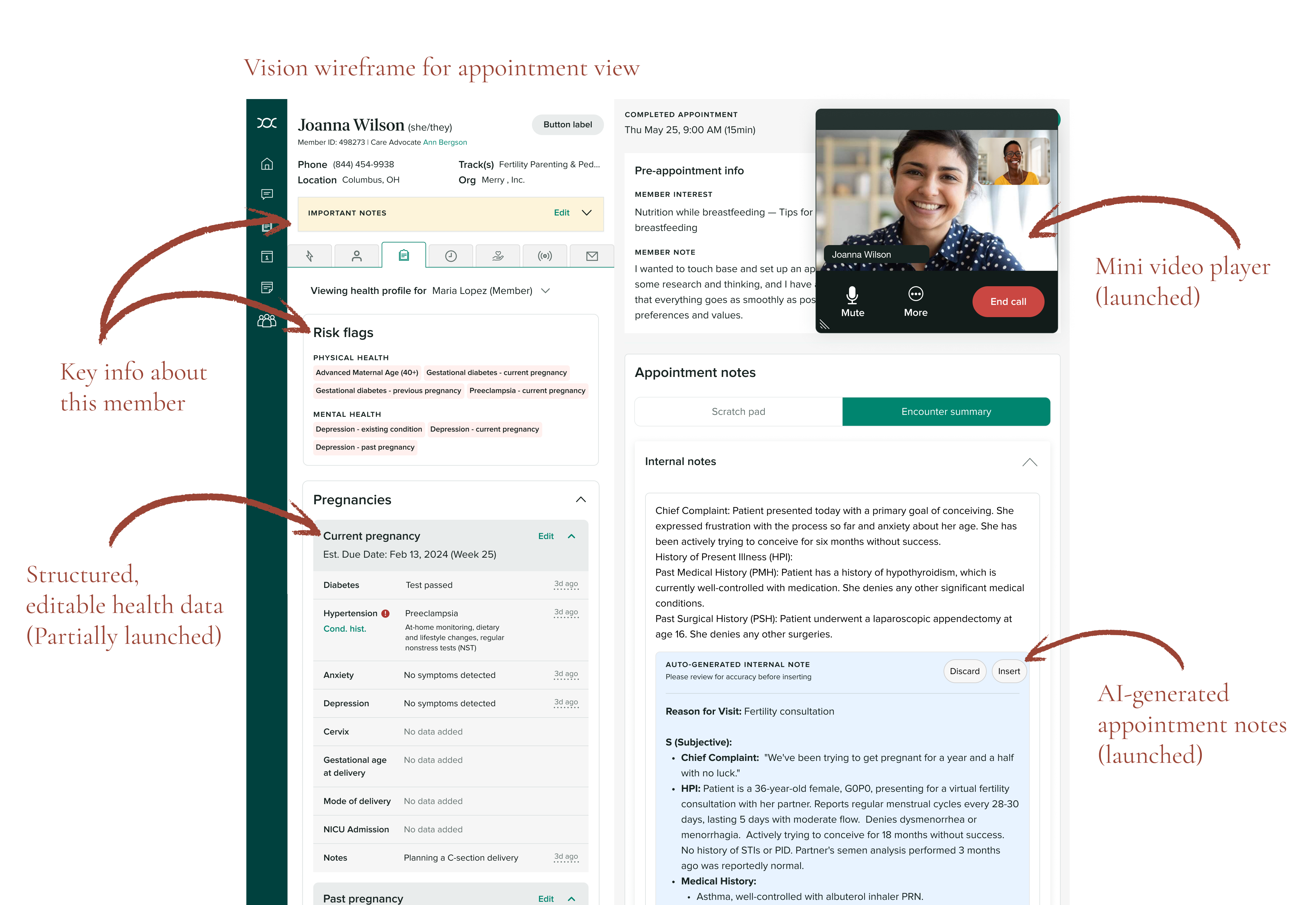
What I Did
I led a North Star exercise that combined provider interviews, competitive analysis, stakeholder prioritization, and clinical leadership input into a coherent vision and a set of design principles for MPractice. The work was grounded in published frameworks for clinical software design, including UTHealth Houston's EHR design principles, IDEO's human-centered healthcare design, and the existing Maven Product Design Principles, all adapted for MPractice's specific user populations: providers, Care Advocates, and Care Coordinators across pregnancy, fertility, and menopause verticals.
Design Principles
The output was a design principles document and a future-state vision prototype for MPractice. The principles, summarized below, established what the platform should optimize for and how it should feel to work in.
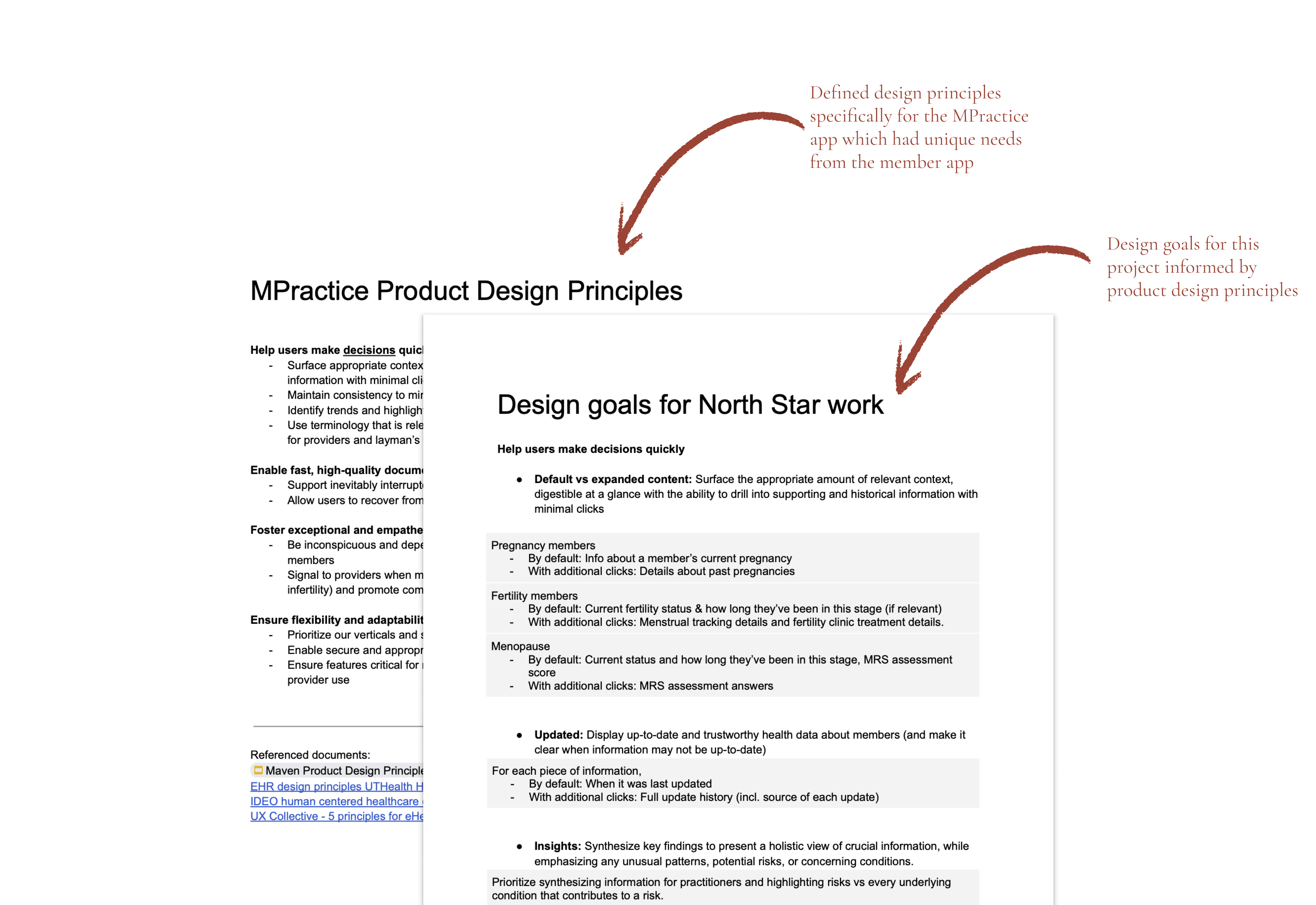
-
Help users make decisions quickly
Surface appropriate context digestible at a glance, with the ability to drill into supporting information in minimal clicks. Use industry-standard terminology for providers and layman's terms for members. Identify trends and highlight changes in member health.
-
Enable fast, high-quality documentation
Support inevitably interrupted workflows. Allow users to recover from errors.
-
Foster exceptional and empathetic care
Be inconspicuous and dependable so providers and Care Advocates can focus on members. Signal when members are in vulnerable situations such as loss or struggling with infertility, and promote compassionate bedside manner.
-
Ensure flexibility and adaptability
Prioritize Maven's verticals and supported life stages over comprehensive medical care. Enable secure, location-aware care delivery. Ensure on-the-go provider use is responsive.
Each principle was paired with concrete design guidance: what defaults look like for each member type (pregnancy, fertility, menopause), how update history is exposed, how risks and unusual patterns are surfaced. The vision prototype showed what MPractice could be: a purpose-built clinical workspace that felt as thoughtful as the care it was designed to support.
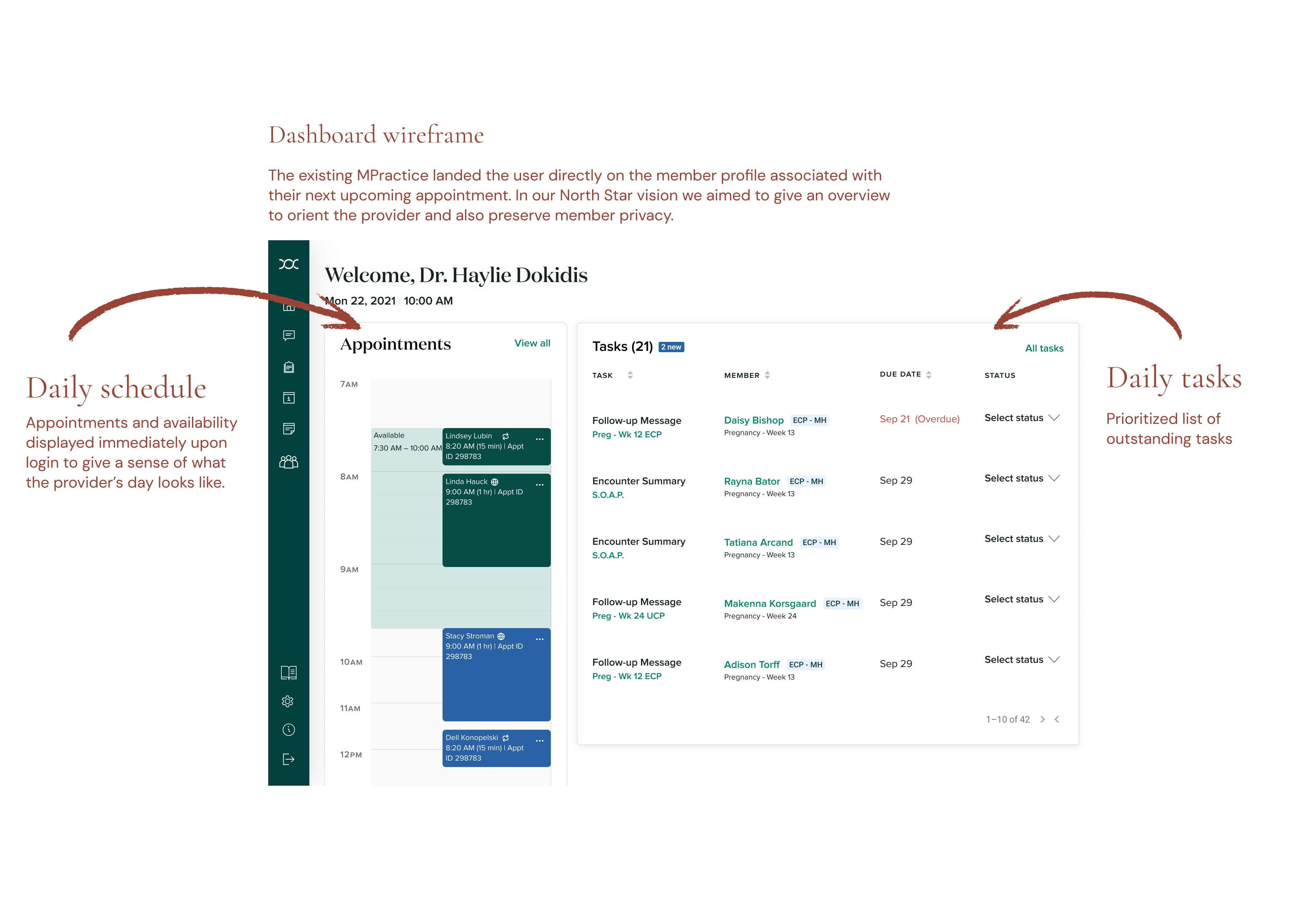
Outcome
The North Star became the reference artifact for roadmap prioritization and design decision-making across the MPractice org.
It was presented across clinical and product leadership, and directly shaped the scope of the documentation rebuild and iOS deprecation efforts that followed.

